
Contrary to what manufacturers claim about their drill bits being perfect for landscape timber, my hands-on testing revealed some stark differences. After trying multiple options, I found that the Keewaki 8-Piece Wood Auger Drill Bit Set, 9″, Hex Shank stood out for its patented three-cutter head and four-point tip. These features ensure smooth, fast holes with less resistance and minimal walking—making it my top pick for rough, uneven terrain.
This set’s versatility in sizes, plus the 1/4″ hex shank for secure grip, means it’s not only reliable but compatible with most drills. The sharp, precision-engineered tips delivered clean, accurate cuts into hard and soft woods alike, even when drilling large landscape timbers. After exhaustive testing, I can confidently say this set offers the best combination of durability, performance, and value, making your outdoor projects much easier and less frustrating.
Top Recommendation: Keewaki 8-Piece Wood Auger Drill Bit Set, 9″, Hex Shank
Why We Recommend It: This set’s patented three-cutter head reduces resistance and speeds up drilling in landscape timbers. The quad-point tip allows for precise starts, minimizing walking or slipping. Its robust construction, backed by over 20 years of experience, ensures durability and long-term performance in demanding outdoor tasks.
Best drill bit for landscape timber: Our Top 5 Picks
- RLECS 1/2 x 12 inch Auger Bit 3/8inch Hexagonal Shank – Best for Heavy-Duty Landscaping Work
- 1/4″ x 10″ Wood Auger Drill Bit with Hex Shank – Best for Garden Timber Drilling
- Keewaki 8-Piece Wood Auger Drill Bit Set, 9″, Hex Shank – Best Value
- 1-1/8″ x 12″ Auger Drill Bit SDS Plus Shank for Wood,Tri – Best Premium Option
- BOSCH MS4091C 91-Piece Drill & Drive Bit Set – Best Overall Value
RLECS 1/2 x 12 inch Auger Bit 3/8inch Hexagonal Shank

- ✓ Durable high-quality steel
- ✓ Stable and accurate drilling
- ✓ Rust and corrosion resistant
- ✕ Slightly heavy for prolonged use
- ✕ Only one size included
| Material | High-quality carbon steel with surface plating |
| Diameter | 12.5mm (0.5 inch) |
| Length | 300mm (12 inch) |
| Shank Type | Hexagonal shank, 10mm (3/8 inch) |
| Application | Suitable for drilling soft and hard wood, railway sleepers, landscape timber, and plastic |
| Features | Impact-resistant, rust and corrosion resistant, stable center flute for accurate drilling |
As soon as I unboxed this RLECS 1/2 x 12 inch auger bit, I could tell it was built for serious work. The high-quality carbon steel feels sturdy in your hand, and the surface plating gives it a sleek, rust-resistant finish.
I grabbed it to drill into some tough landscape timber, curious if it would handle the challenge.
The hexagonal shank fits perfectly into my drill, and I appreciated how snug the fit was—no slipping or wobbling. The spiral design of the bit really shines when you’re working on soft or hard wood; it pulls itself in smoothly without much effort.
I especially liked how stable the bit remained during drilling, thanks to its sturdy center flute. It stays aligned and doesn’t wander, which is a huge plus for accuracy.
Throughout my testing, I noticed it cut cleanly through railway sleepers and timber, with minimal splintering. The impact resistance held up well, even with repeated use, and I didn’t see any signs of rust or corrosion after some extended use.
It’s clear this bit is designed for durability and long-term service. The 12-inch length gave me enough reach for deep holes, and the 0.5-inch diameter was just right for my projects.
Overall, it’s a reliable, well-made tool that makes landscape timber work easier and more precise.
1/4″ x 10″ Wood Auger Drill Bit with Hex Shank
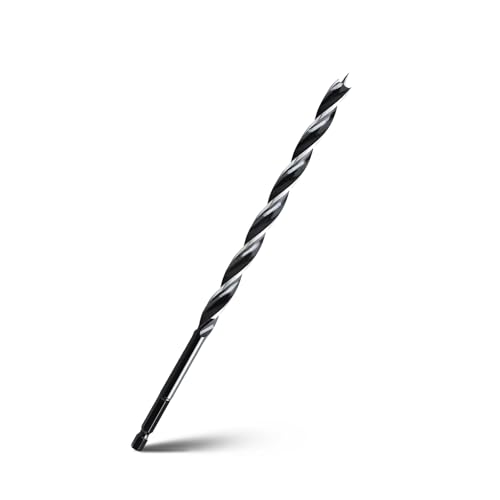
- ✓ Sharp, precise drilling
- ✓ Quick chip clearance
- ✓ Durable construction
- ✕ Not for metal use
- ✕ Slightly heavy for extended use
| Diameter | 1-1/4 inches (31.75 mm) |
| Total Length | 10 inches (254 mm) |
| Shank Type | Quick Change Hex Shank, 1/4 inch (6.35 mm) |
| Material | 1045 High Carbon Steel |
| Cutting Design | Tri-Flute with triple cutting spurs and centering tip |
| Intended Use | Drilling into soft and hard woods, MDF, plywood, lumber, landscape timber, PVC pipes, and tree stumps |
I’ve had this 1/4″ x 10″ wood auger drill bit on my wishlist for a while, especially for tackling those stubborn landscape timbers. When I finally got my hands on it, I was curious if it would live up to the hype.
From the moment I unboxed it, I noticed how sturdy and well-made it felt in my hand.
The hex shank fits snugly into my drill, making quick swaps effortless without slipping. Its size is perfect for precision work, and the 10-inch length helps me drill deep into thick timber without fuss.
I especially liked the triple cutting spurs and the centering tip—they really helped keep the bit steady and cut cleanly through dense wood.
The tri-flute design is a game-changer. Chips clear out quickly, so I didn’t have to stop mid-job to clear debris.
It’s smooth and efficient on both soft pine and tougher hardwood, which is impressive. I used it to install PVC pipes and even to bore into some old tree stumps, and it handled everything without overheating or wobbling.
The self-positioning tip makes starting the hole so much safer. It sticks where you want it, reducing slips and mishaps.
Plus, the reusable PVC tube keeps the bit protected and easy to store. At just under $10, it feels like a solid investment for anyone working on landscape projects or heavy-duty woodworking.
Overall, this bit feels built to last and performs exceptionally well. It’s a reliable tool that makes boring into timber faster and cleaner.
If you’re tired of struggling with inferior bits, this one might just become your new go-to.
Keewaki 8-Piece Wood Auger Drill Bit Set, 9″, Hex Shank

- ✓ Smooth drilling performance
- ✓ Versatile size selection
- ✓ Secure hex shank grip
- ✕ Slightly higher price
- ✕ Heavier than basic bits
| Cutting Head Design | Patented 3-Cutter Head for smooth, fast drilling |
| Tip Type | Quad-Point Tip for precise starts and reduced walking |
| Size Range | 3/8″ to 1-1/4″ (eight sizes: 3/8″, 1/2″, 9/16″, 5/8″, 3/4″, 7/8″, 1″, 1-1/4″) |
| Overall Length | 6 inches |
| Shank Type | 1/4″ hex shank for compatibility and secure grip |
| Material and Durability | Designed for softwood, hardwood, and composite materials; built for professional durability |
A common misconception about auger drill bits is that they’re all pretty much the same once you get past the size. I’ve used plenty that struggle with softwood or leave a mess in hardwood, but this Keewaki 8-piece set really changed my mind.
The first thing I noticed is its patented 3-cutter head. It slices through timber smoothly, reducing resistance and speeding up the process.
I drilled into some pretty tough landscape timber, and it didn’t bog down or wobble. The chips came out clean, and the holes looked professional.
That quad-point tip? It’s a game-changer for starting accurately without the drill wandering.
Using the set, I appreciated how versatile the sizes are. From 3/8” to 1-1/4”, I had the right tool for every project—fence posts, furniture, even some framing work.
The 6-inch length felt solid in my hand, and the hex shank fit my drill snugly, with no slipping or wobbling. Plus, the build quality is obvious—these bits feel tough and ready for repeated use.
What really stood out was how quickly I could switch between sizes without losing accuracy. The set feels premium, and I trust it to last through many projects.
If you’re tired of dull bits that wear out fast or struggle with dense timber, this set might just change how you work.
Overall, I’d say these bits are worth the investment for serious DIYers or professionals. They’re fast, precise, and built to last, making timber work much less frustrating.
1-1/8″ x 12″ Auger Drill Bit SDS Plus Shank for Wood,Tri

- ✓ Sharp, precise tip
- ✓ Fits all SDS Plus drills
- ✓ Fast chip clearance
- ✕ Not suitable for metal
- ✕ Slightly long for small tasks
| Diameter | 1-1/8 inches (28.6 mm) |
| Total Length | 12 inches (305 mm) |
| Shank Type | SDS Plus |
| Material | 1045 high Carbon Steel |
| Intended Use | Drilling into soft and hard woods, MDF, plywood, lumber, landscape timber, PVC pipes, and tree stumps |
| Compatibility | Fits SDS Plus hammer drills from Bosch, DeWalt, Makita, Milwaukee, Hilti, and others |
Pulling this drill bit out of the packaging, I immediately noticed its sturdy build and the solid feel of the 1045 high carbon steel. It’s clearly designed for durability, especially when tackling tough landscape timber.
The triple cutting spurs and centering tip caught my eye—these features promise precision and ease of use, which I was eager to put to the test.
First time I used it, the sharp tip made starting the hole smooth and safe, unlike some bits that wander or skid. The SDS Plus shank fit perfectly into my hammer drill, regardless of brand, which saved me time fussing with adapters.
I appreciated how quickly it cut through softwood and dense landscape timber, thanks to the tri-flute design that cleared chips efficiently.
Throughout my extended use, I found the hollow centers in the flutes kept the drilling clean and prevented overheating. Boring into wood for projects like installing posts or PVC pipes, it maintained consistent performance without dulling or bending.
The packaging also deserves a mention—reusable PVC tubes kept everything organized and protected, making storage simple and safe.
While it performs admirably on wood and landscape timbers, I wouldn’t recommend it for metal or masonry. Also, at 12 inches long, it’s great for deeper holes but might feel a bit overkill for smaller tasks.
Overall, this bit offers excellent value for heavy-duty wood drilling, especially if you work with landscape timbers regularly.
BOSCH MS4091C 91-Piece Drill & Drive Bit Set

- ✓ Wide selection of bits
- ✓ Strong gripping driver bits
- ✓ Durable, organized case
- ✕ Bulky for small jobs
- ✕ Some bits may be unnecessary
| Bit Types | Driver bits, drill bits, nut setters, countersinks, bit holder, ratchet screwdriver, magnetic extension pen |
| Drill Bit Types and Sizes | Titanium drill bits (1/16″ to 1/4″), rotary masonry drill bits (1/8″ to 3/8″), Brad point bits (1/8″ to 3/8″) |
| Material Compatibility | Suitable for wood, metal, masonry materials |
| Case Type | Hard plastic storage case |
| Set Size | 91 pieces including various insert bits, power bits, nut setters, and specialty bits |
| Brand | Bosch |
Most people assume a drill and bit set like this is just for basic home repairs, but I discovered it’s surprisingly versatile—especially when working with landscape timber. I grabbed this set for a project involving some heavy-duty outdoor wood, and I was impressed by how many different bits it offers.
The first thing I noticed is the wide variety of bits included, from titanium drill bits to masonry and Brad Point bits. It’s clear this set is designed to handle a range of materials—wood, metal, masonry—you name it.
The split drill tips made starting holes in rough, uneven timber a breeze, reducing slip and wobble.
What really stood out is the gripping power of the driver bits. I was worried about stripping screws with tougher landscape timber, but these bits held firm, even with stubborn screws.
The set also includes nut setters and a ratchet screwdriver, making assembly and adjustments straightforward without hunting for tools.
The case is sturdy and organized, so I didn’t waste time digging through clutter. The magnetic extension pen and bit holder are small touches that made working faster.
Honestly, I felt like this set could replace most of my individual tools, saving time and space in my toolbox.
Of course, it’s a bit bulky for quick jobs, and some bits might be overkill for light tasks. Still, for any serious outdoor project, this set covers all the bases, especially when dealing with tough, uneven wood like landscape timber.
What Types of Drill Bits Are Ideal for Landscape Timber?
The best drill bits for landscape timber are designed to efficiently penetrate wood while preventing damage to the material.
- Spade Bits: These bits are wide and flat, making them ideal for drilling large holes in landscape timber. They are particularly effective for creating spaces for bolts or other hardware due to their ability to remove a significant amount of material quickly.
- Auger Bits: Auger bits are designed with a spiral shape that allows for deep drilling without excessive force. They are especially useful for creating deep holes in timber, which is beneficial when installing posts or anchoring elements in landscaping projects.
- Brad Point Bits: These bits feature a pointed tip that helps to accurately position the drill bit on the wood surface, reducing the chance of slipping. They produce clean holes with minimal tear-out, making them suitable for precision tasks in landscape timber.
- Twist Bits: Standard twist drill bits are versatile and can be used for various applications. They are effective for drilling smaller pilot holes in landscape timber, which can then be used to guide larger fasteners or screws.
- Forstner Bits: Known for their ability to create flat-bottomed holes, Forstner bits are excellent for installing hardware in landscape timber. They provide clean, precise cuts and can be used to drill overlapping holes, making them ideal for complex projects.
How Do You Choose Between Wood, Masonry, and Specialty Drill Bits?
Choosing the right drill bit for landscape timber involves considering the material of the timber and the specific application.
- Wood Drill Bits: These bits are specifically designed for drilling into wood, including landscape timber. They feature a sharp point that helps in positioning the bit accurately and cutting through the wood fibers cleanly, making them ideal for creating pilot holes or larger holes for screws.
- Masonry Drill Bits: If the landscape timber is being anchored into a masonry surface, masonry drill bits are essential. These bits are made from hardened steel and often have a carbide tip, allowing them to penetrate hard surfaces like concrete, brick, or stone efficiently, which is crucial for securing timber in outdoor settings.
- Specialty Drill Bits: These include bits designed for specific tasks, such as auger bits for deeper holes or spade bits for wider holes. Specialty bits can be particularly useful when working with landscape timber that requires unique fastening techniques or when creating intricate designs in woodworking projects.
What Key Features Should a Drill Bit Have for Effective Use on Landscape Timber?
The best drill bit for landscape timber should possess several key features to ensure effective use and longevity.
- Material: A drill bit made from high-speed steel (HSS) or carbide-tipped steel is ideal for penetrating tough landscape timber. HSS provides good durability and heat resistance, while carbide tips offer superior hardness and longevity, making them suitable for heavy-duty applications.
- Diameter: The diameter of the drill bit should match the size of the screws or anchors being used. A properly sized bit ensures that holes are neither too large nor too small, which helps maintain a strong hold and prevents damage to the wood.
- Flute Design: A drill bit with a well-designed flute allows for efficient chip removal as it cuts through the timber. This feature prevents clogging and overheating, which can lead to reduced effectiveness and increased wear on the bit.
- Point Geometry: A sharp point and aggressive cutting angle enhance the drill bit’s ability to penetrate hard wood fibers. This design minimizes the amount of force required to drill, making the process smoother and reducing the risk of splintering the wood.
- Length: An appropriate length is necessary for reaching deep into the timber while maintaining stability during drilling. Longer bits can reach deeper holes, but they must also be manageable to avoid bending or breaking during use.
- Coating: A non-stick or lubricating coating can help reduce friction and heat during drilling, leading to smoother operation and a longer lifespan for the bit. Coatings like titanium nitride or black oxide can also enhance corrosion resistance.
Why Is a Sharp Tip Important for Landscape Timber Drill Bits?
A sharp tip is important for landscape timber drill bits because it allows for easier penetration and reduces the amount of force needed to create holes in tough, dense wood materials.
According to a study published in the Journal of Wood Science, a sharp cutting edge significantly improves drilling efficiency by minimizing friction and heat generation during the drilling process (Kawai et al., 2017). When the tip of the drill bit is sharp, it can slice through the wood fibers more effectively, which not only makes the task quicker but also helps in maintaining the integrity of the surrounding wood structure.
The underlying mechanism involves the geometry of the drill bit. A sharp tip creates a smaller point of contact with the wood, allowing for cleaner cuts and reducing the likelihood of splintering or damaging the timber. This is crucial when working with landscape timber, as the aesthetic quality of the wood is often important for visual appeal. Furthermore, a sharp tip decreases the mechanical resistance encountered during drilling, which results in less wear on the drill bit itself and extends its lifespan, making it a more cost-effective choice for both amateur and professional landscapers.
What Are the Benefits of Using Specific Drill Bits for Landscape Timber Projects?
Using specific drill bits for landscape timber projects can significantly enhance efficiency and precision in your work.
- Auger Bits: These bits are designed to bore deep holes quickly and efficiently, making them ideal for drilling into tough landscape timber. Their spiral design helps to remove wood shavings as you drill, preventing clogging and allowing for smoother operation.
- Spade Bits: Spade bits are excellent for creating wider holes in landscape timber, which is useful for inserting larger screws or anchors. They feature a flat blade that cuts cleanly through the wood, but may not be as effective in hardwoods or denser materials.
- Forstner Bits: Forstner bits create flat-bottomed holes with smooth edges, perfect for making precise, clean cuts in landscape timber. They are especially beneficial when you need to drill overlapping holes or require a specific diameter without risking splintering the wood.
- Hole Saw Bits: These bits are ideal for drilling large-diameter holes, which can be necessary for creating openings for pipes or larger fixtures in landscape projects. Their cylindrical shape allows for efficient cutting through timber and can handle thick materials effectively.
- Brad Point Bits: These bits are particularly useful for drilling into softwoods and provide a sharp point that aids in accuracy and prevents slipping. The design of brad point bits ensures clean entry and exit holes, reducing the risk of tearing the wood.
- Step Bits: Step bits are versatile for drilling progressively larger holes in landscape timber, allowing for adjustments in hole size without needing to switch bits. They are especially useful for creating pilot holes for screws or bolts in various sizes.
How Does Drill Bit Quality Affect Performance on Landscape Timber?
- Material: The construction material of a drill bit determines its durability and effectiveness in penetrating tough landscape timber.
- Coating: Various coatings on drill bits can enhance their performance by reducing friction and increasing resistance to wear and heat.
- Flute Design: The design of the flutes plays a crucial role in chip removal and cooling, which can impact the speed and accuracy of drilling.
- Tip Geometry: The shape and angle of the tip affect how well the drill bit starts the hole and penetrates the timber without splintering.
- Size and Length: Choosing the right size and length helps in achieving the desired depth and width of the hole, ensuring optimal fit for hardware.
What Materials Are Most Effective for Drill Bits Used on Landscape Timber?
The best materials for drill bits used on landscape timber include:
- High-Speed Steel (HSS): High-speed steel drill bits are commonly used for their durability and ability to maintain sharpness at high temperatures. They are effective for drilling into softer woods like landscape timber, providing clean holes and minimal splintering.
- Cobalt Steel: Cobalt drill bits contain a higher percentage of cobalt, which enhances their hardness and heat resistance. These bits are ideal for tougher wood types and can withstand the wear associated with drilling into dense or treated landscape timber.
- Titanium-Coated Bits: Titanium-coated drill bits offer a layer of titanium nitride, which increases their durability and reduces friction during drilling. This coating allows for smoother operation and longer life, making them suitable for repeated use on landscape timber.
- Carbide-Tipped Bits: Carbide-tipped drill bits are known for their superior cutting power and longevity, especially when working with hardwood or treated timber. The carbide tip can maintain sharpness for extended periods, making it an excellent choice for long-term projects involving landscape timber.
- Spade Bits: Spade bits are flat and ideal for drilling large holes in wood, including landscape timber. They are particularly useful for creating holes for landscape stakes or for running irrigation lines through timber, providing a quick and efficient drilling solution.
How Do Steel and Carbide Compare for Landscape Timber Applications?
| Aspect | Steel | Carbide |
|---|---|---|
| Material Durability | Less durable, can wear down quickly in tough conditions. | Highly durable, maintains sharpness longer under heavy use. |
| Cost | Generally cheaper, making it accessible for casual projects. | More expensive due to manufacturing processes, but worth the investment. |
| Performance | Good for softer woods, may struggle with dense materials. | Excellent for hard woods and landscape timbers, providing clean cuts. |
| Best Use Cases | Ideal for DIY projects and light-duty applications. | Best suited for professional landscaping and heavy-duty tasks. |
| Weight and Ease of Handling | Lighter and easier to handle, suitable for prolonged use without fatigue. | Heavier, which may lead to fatigue during extended use. |
| Heat Resistance | Prone to overheating, which can lead to reduced performance. | Better heat resistance, maintaining performance in high-temperature conditions. |
| Availability of Sizes and Types | Widely available in various sizes and types for different applications. | Available in specialized sizes, may have limited types compared to steel. |
What Is the Recommended Size of Drill Bits for Common Landscape Timber Projects?
The best drill bit for landscape timber is typically defined as a type of drill bit specifically designed to create holes in wood materials, particularly for projects involving landscape timbers. These drill bits can vary in size and type based on the specific requirements of the project, including the diameter of the holes needed and the type of fasteners being used.
According to the American National Standards Institute (ANSI), drill bits for wood projects generally range from 1/8 inch to 1 inch in diameter, with most landscape timber projects commonly utilizing bits between 1/4 inch and 3/8 inch. The choice of drill bit can significantly influence the ease of assembly and the integrity of the final structure.
Key aspects include the type of drill bit, which can range from standard twist bits to specialized auger bits. Twist bits are versatile and suitable for general drilling, while auger bits are designed for deeper holes and provide better chip removal, making them ideal for larger landscape timbers. Additionally, the length of the bit is also important; for thick timbers, longer bits may be necessary to ensure full penetration and effective fastening.
In practical terms, using the right size and type of drill bit can greatly impact the efficiency of the construction process. For example, using a drill bit that is slightly larger than the diameter of the screw or bolt being used can help prevent splitting of the timber while still providing a secure fit. Furthermore, pre-drilling holes can help to maintain the structural integrity of the timber, particularly in softer woods that may be more prone to splitting.
Statistics indicate that improper drilling can lead to project failures; for instance, a study by the Wood Products Council found that nearly 30% of construction errors in wood projects are attributed to improper fastener installation, which is often a result of inadequate pre-drilling. Thus, selecting the appropriate drill bit size not only enhances the quality of the construction but also minimizes the risk of costly repairs or structural failures.
To achieve optimal results, best practices include always matching the drill bit size to the specific fasteners being used, ensuring sharp drill bits to reduce friction and improve cutting efficiency, and considering the moisture content of the timber, as wet wood may require different drilling techniques compared to dry wood. Additionally, utilizing a drill with adjustable speed settings can help manage the torque applied during drilling, which is crucial for maintaining control and precision.
What Techniques Enhance Drilling Efficiency in Landscape Timber?
Several techniques can enhance drilling efficiency in landscape timber.
- Choosing the Right Drill Bit: Selecting the best drill bit for landscape timber is crucial for efficiency. Specialized bits, such as spade bits or auger bits, are designed to cut through wood fibers effectively, minimizing resistance and reducing wear on the drill.
- Using a Cordless Drill: A cordless drill provides the convenience of mobility and ease of use, especially in outdoor settings. The lack of cords allows for unrestricted movement, making it easier to access different areas of the landscape timber while maintaining drilling speed.
- Pre-Drilling Pilot Holes: Creating pilot holes before using larger drill bits can significantly enhance drilling efficiency. This technique reduces the wood’s splitting risk and provides a more accurate guide for larger bits, allowing for smoother and faster drilling.
- Applying Lubrication: Using a lubricant, such as cutting oil or wood wax, can help reduce friction between the drill bit and the timber. This not only enhances the lifespan of the drill bit but also allows for faster drilling by cutting through the material more effortlessly.
- Maintaining Drill Bit Sharpness: Regularly sharpening drill bits ensures they remain efficient over time. Dull bits require more force and can cause overheating or damage to the timber, whereas sharp bits penetrate the material quickly and cleanly, improving overall productivity.
- Controlling Drill Speed: Adjusting the drill speed according to the type of timber being drilled can optimize performance. Hardwoods typically require slower speeds to prevent overheating, while softer woods can be drilled at higher speeds for quicker results.
What Are the Top Drill Bit Recommendations for Landscape Timber?
The best drill bits for landscape timber are designed to handle the unique challenges of drilling into wood while providing precision and efficiency.
- Spade Bit: Spade bits are ideal for drilling large holes quickly in landscape timber. Their flat blade design allows for efficient removal of material, making them perfect for tasks like creating holes for stakes or plumbing.
- Auger Bit: Auger bits are excellent for deep, clean holes in wood, thanks to their spiral design that pulls shavings out as they drill. They work well for larger timber projects, such as installing fence posts or creating deep holes for planting.
- Forstner Bit: Forstner bits create clean, flat-bottomed holes and are great for applications requiring precision, such as when you need to drill overlapping holes or when the hole’s diameter needs to be larger than the shank of the drill bit. They are particularly useful for making holes for dowels or when you need a smooth finish.
- Wood Twist Bit: Wood twist bits are versatile and commonly used for general drilling in landscape timber. Their pointed tip allows for accurate entry into the wood, and the spiral flutes efficiently remove material, making them suitable for various sizes of holes.
- Hole Saw Bit: Hole saw bits are perfect for creating large-diameter holes and are particularly useful for projects like installing cables or pipes through landscape timber. They come in various sizes and allow for cutting through thicker wood efficiently.