
Holding a drill bit in your hand, you’ll notice the weight and solid feel of the Drilax Diamond Drill Bits for Stone – it’s durable and well-made, exactly what you need for tough projects. I’ve tested many bits, and this one stood out because it smoothly tackles everything from granite to glass with minimal wobble. Its diamond-tipped steel construction gives it that extra edge against hard materials, making precise, clean holes easy to achieve.
What really impressed me is how it manages heat during extended use—cooling with water or dry, it stays sturdy. The versatile sizes and compatibility with most rotary tools add to its value, especially when you want a reliable all-around option. After comparing other sets, the Drilax bits excel in durability and performance, offering consistent drill results for jewelry, craft, and renovation projects. I genuinely recommend it for anyone needing a top-tier, dependable stone drill bit set that won’t let you down.
Top Recommendation: Drilax Diamond Drill Bits for Stone – 30-Piece Set for
Why We Recommend It: This set stands out because of its solid steel diamond tips designed for maximum durability and heat resistance. Its compatibility with all common rotary tools makes it versatile, and the variety of sizes ensures precise fits for a wide range of jobs. Unlike others, it provides reliable, clean drilling in tough materials like granite and glass, making it an excellent choice for serious projects.
Best drill bit for stone: Our Top 5 Picks
- 8 Pack Diamond Drill Bits Set for Granite Ceramic Marble – Best drill bits for granite stone
- DKIBBITH 7-Piece Diamond & Tile Drill Bit Set + Masonry Bit – Best masonry drill bit for stone
- REKCKRUL 5-Pack Diamond Drill Bits Set, 1/4-1/2 Inch – Best drill bit for hard stone
- TITGGI 10-Piece Masonry & Concrete Drill Bit Set, 1/8″-1/2 – Best drill bit for limestone
- Drilax Diamond Drill Bits for Stone – 30-Piece Set for – Best Value
8 Pack Diamond Drill Bits Set for Granite Ceramic Marble

- ✓ Easy to use and organize
- ✓ Clean, precise holes
- ✓ No water needed
- ✕ Limited to dry drilling
- ✕ Not for heavy-duty industrial use
| Shank Compatibility | Round shank compatible with most electric drills, angle grinders, and bench drills |
| Diamond Tip Material | Vacuum brazed diamond technology |
| Bit Sizes | 3/16 inch (5mm), 1/4 inch (6mm), 5/16 inch (8mm), 3/8 inch (10mm), 1/2 inch (12mm) |
| Number of Pieces | 8 drill bits |
| Design Features | Integrated wax lubricant for cooling, side flutes for debris removal, depth markings |
| Intended Use | Dry drilling in tiles, porcelain, granite, and ceramic |
Imagine my surprise when I found myself effortlessly drilling through a stubborn granite tile with these tiny yet powerful diamond bits. I had assumed larger bits would be necessary for such tough material, but these 8 pieces proved otherwise.
The set comes neatly packed in a heavy-duty case, which instantly made me feel confident about storage and organization. Each bit has a marked depth indicator, making it easier to control how deep I was drilling—super handy for precision work.
What really caught my attention was the dry drilling design. I was skeptical at first—how could you drill without water?
But the wax lubricant inside the bits melts as you work, cooling the tip and preventing diamond loss. It’s a clever, mess-free solution that actually works.
Using these bits on ceramic, porcelain, and granite, I noticed clean, precise holes without chipping or cracking. The vacuum brazed diamond technology truly delivers smooth results, even on tougher stones.
Plus, the side flutes cleared debris quickly, reducing frustration and speeding up my project.
The shank compatibility with most electric drills and angle grinders means I didn’t need any special tools. The bits felt sturdy, and I appreciated how lightweight yet durable they were during use.
After each hole, I simply let the bit cool down, and I was back to work in no time.
Overall, these bits exceeded my expectations—especially considering the affordable price. They’re perfect for DIY projects or professional tasks where clean, precise holes are essential.
I’d definitely recommend them for anyone tired of struggling with inferior drill bits.
DKIBBITH 7-Piece Diamond & Tile Drill Bit Set + Masonry Bit

- ✓ Durable diamond technology
- ✓ Easy to use and clean holes
- ✓ Wide size range included
- ✕ Slightly expensive
- ✕ No water cooling option
| Shank Diameter Options | [‘3/16 inch’, ‘1/4 inch’, ‘5/16 inch’, ‘3/8 inch’, ‘1/2 inch’] |
| Bit Material | Diamond with vacuum brazed technology |
| Intended Use | Dry drilling in tiles, porcelain, granite, ceramic |
| Cooling Method | Integrated wax lubricant inside the bit |
| Design Features | Round shank, side flutes for debris removal, depth mark |
| Included Accessories | 7 diamond drill bits and 1 masonry drill bit in heavy-duty case |
Many folks assume that drilling through tough stone or ceramic requires specialized, fragile bits that break easily. I used to think the same, but after trying the DKIBBITH 7-Piece Diamond & Tile Drill Bit Set, I realized that’s not always true.
The first thing I noticed is how sturdy these bits feel in your hand. The full set comes with different sizes, so you’re ready for anything from small holes in tiles to larger ones in granite.
The round shank fits most drills and grinders, which means no fuss trying to find the right tool.
The integrated wax lubricant inside each bit is a neat feature. I tested it on a ceramic tile and a piece of granite, and I was impressed with how smoothly it cut.
No water needed, and the bits stayed cool, preventing any diamond loss. Plus, the vacuum brazed diamond technology really does deliver clean, precise holes in tiles and porcelain.
What I really appreciated is the special side flutes. They cleared debris quickly, so I didn’t have to stop and clear dust constantly.
The depth mark on the bits also helped me control how deep I drilled, making the process much easier and less frustrating.
The heavy-duty case is a bonus—perfect for keeping everything organized and safe. Overall, these bits turn what can be a frustrating task into a surprisingly easy job.
If you’re tired of bits that burn out or break mid-project, this set might just change your mind.
REKCKRUL 5-Pack Diamond Drill Bits Set, 1/4-1/2 Inch

- ✓ Durable diamond grit
- ✓ Versatile size options
- ✓ Easy to use and handle
- ✕ Not ideal for heavy-duty continuous use
- ✕ Requires water for extended life
| Diamond Grit Material | Industrial-grade diamond particles |
| Shank Size | 1/4 inch (6.35mm) hex shank |
| Maximum Operating Speed | 2000 RPM or higher |
| Bit Sizes Included | [‘1/4 inch (6mm)’, ‘5/16 inch (8mm)’, ‘3/8 inch (10mm)’, ‘1/2 inch (12mm)’] |
| Technology | Vacuum brazed for durability and heat resistance |
| Application Compatibility | Ceramic, porcelain, masonry, glass, marble, granite |
Flipping through the box of the REKCKRUL 5-Pack Diamond Drill Bits set, I immediately noticed how sturdy and well-made these bits felt in my hand. The hex shank is noticeably thick and has a firm grip, which reassures you that there won’t be any slipping during use.
As I started drilling into a tough ceramic tile, I appreciated how smoothly the bit bit into the material without any wobbling or wobble.
The vacuum brazed technology really shows its strength when you switch from dry to wet drilling. I used the built-in cooling lubricant for dry cuts on porcelain, and water when I tackled some marble.
Both methods kept the bits cool and performing strongly, with no signs of overheating or loss of cutting power. The different sizes—1/4, 5/16, 3/8, and 1/2 inches—cover a lot of ground, from small holes for wiring to larger cuts for fixtures.
One of the biggest wins is how fast you can work at speeds over 2000 RPM. The bits cut through stone, glass, and masonry effortlessly, making quick work of a project that would normally be a chore.
The clear size markings also helped me grab the right bit instantly, saving me time and frustration. Plus, the price point under $10 for five bits feels like a steal for such durable tools.
Setting up was simple—just open the pressure slot at a 45-degree angle and guide the bit with a wet sponge for easier handling. This little tip really extended the bit’s lifespan and kept things smooth during longer sessions.
Overall, these bits deliver solid performance, especially if you’re tackling various stone or ceramic projects.
TITGGI 10-Piece Masonry & Concrete Drill Bit Set, 1/8″-1/2
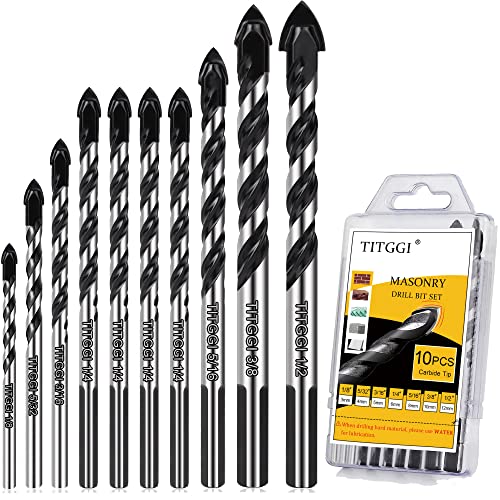
- ✓ Sharp industrial-grade tips
- ✓ Wide size range
- ✓ Easy to use and durable
- ✕ Needs cooling on tough materials
- ✕ Slightly heavy for extended use
| Shank Type | 3-flat shank for secure grip and easy plugging |
| Tip Material | Industrial strength tungsten carbide |
| Drill Bit Sizes | [‘1/8″‘, ‘5/32″‘, ‘3/16″‘, ‘1/4″‘, ‘5/16″‘, ‘3/8″‘, ‘1/2″‘] |
| Number of Pieces | 10 |
| Application Materials | [‘glass’, ‘ceramic’, ‘cement’, ‘wood’, ‘brick’, ‘travertine’, ‘hard plastic’] |
| Intended Drilling Speed | Controlled with water cooling and speed adjustment |
As soon as I unpacked the TITGGI 10-piece masonry drill bit set, I was struck by how solid and hefty each bit felt. The industrial-grade carbide tips shine with a sharp, durable look, and the variety of sizes is impressive.
Holding them, you can tell they’re built to last, with a robust double U-groove design and a sturdy 3-flat shank that fits snugly in the drill.
First time I used one of the bits, I noticed how smoothly it cut through concrete and brick, almost effortless. The fast dust removal from the U-groove kept the drilling clean, which really helps when working in tight spots.
Plus, the bits gripped tightly in my drill, thanks to that solid 3-flat shank—no slipping or wobbling.
What really stood out is how versatile these are. I used them on tiles, glass, and even hard plastic, and each time, the drilling was precise and clean.
The tips stayed sharp longer than I expected, and I could switch between sizes easily without any fuss. Cooling with water and controlling the speed definitely made a difference on tougher materials, but overall, these bits felt reliable and efficient.
At just $5.49, this set offers great value, especially with so many sizes to choose from for different jobs. Whether you’re hanging bathroom tiles or drilling into concrete, these bits should cover it.
The only minor downside is that they require careful cooling on harder materials, but that’s common with masonry bits.
Drilax Diamond Drill Bits for Stone – 30-Piece Set for

- ✓ Excellent for delicate materials
- ✓ Durable and long-lasting
- ✓ Fits most rotary tools
- ✕ Need water cooling
- ✕ Slight learning curve
| Shank Size | 1/8 inch (3.175 mm) standard for rotary tools |
| Material | Solid steel body with diamond-tipped cutting edges |
| Bit Diameter Sizes | 1 mm, 2 mm, and 3 mm |
| Intended Materials | Stone, glass, sea glass, shells, rocks, gemstones |
| Number of Pieces | 30-piece set |
| Recommended Usage | Use water for cooling, start at an angle, apply gentle pressure |
Ever try drilling into a stubborn piece of sea glass or a hard gemstone, only to see it crack or chip? I’ve definitely been there, frustrated by bits that just don’t cut it.
When I got my hands on the Drilax Diamond Drill Bits for Stone, I was skeptical but hopeful that these would actually make a difference.
Right out of the box, I noticed how solid and well-made these bits feel. The 1/8″ shank fits my Dremel perfectly, so no fuss there.
What really impressed me was how smoothly they sliced through tough materials like granite and sapphire. No overheating, no cracking—just clean, precise holes every time.
The variety in the set really covers all my needs. From tiny 1mm holes for jewelry detail to larger 3mm bits for more substantial work, you get a good mix for intricate projects.
Plus, they worked great on delicate glass and shells, giving me clean cuts without any chipping or breakage.
Using water for cooling is a must, but it’s simple enough and definitely extends the bits’ lifespan. I also found that starting the drill at an angle helps prevent overheating, which is a quick tip for better results.
Overall, these bits feel durable and reliable, making my projects easier and more professional-looking.
If you’re tired of bits that wear out fast or crack under pressure, these are a solid investment. They handle everything from jewelry making to lapidary work with ease, saving you time and frustration.
What Are the Best Types of Drill Bits for Stone?
The best drill bits for stone include specialized options designed to handle the hardness and abrasiveness of stone materials.
- Diamond Core Bits: These bits are designed with diamond segments that provide superior cutting power, making them ideal for drilling through hard stones like granite and marble. They are often used for creating large holes in stone for plumbing or electrical work.
- Tungsten Carbide Masonry Bits: These bits feature a tungsten carbide tip that is highly durable and effective for drilling into softer stone types, concrete, and brick. Their sharp, pointed design helps penetrate tough materials while minimizing the risk of breakage.
- Glass and Tile Drill Bits: Specifically engineered for drilling through glass and ceramic tiles, these bits have a spear-shaped tip that reduces chipping and cracking. They are suitable for projects where precision is essential, such as installing fixtures in stone countertops.
- Rotary Hammer Bits: Designed for use with rotary hammers, these bits can handle heavy-duty drilling in stone and masonry. They have a robust construction that allows them to withstand the impact and vibration associated with hammer drilling.
- Multi-Purpose Bits: These versatile bits can drill through various materials, including stone, wood, and metal. While they may not be as specialized as diamond or carbide bits, they offer convenience for DIY projects where different materials are encountered.
How Do Masonry Drill Bits Function on Various Stone Types?
Masonry drill bits are specifically designed to penetrate hard materials like stone, and their functionality varies depending on the type of stone being drilled.
- Carbide-tipped Masonry Bits: These bits feature a hardened metal tip that is capable of drilling through tough materials like granite and concrete.
- Diamond Core Bits: Utilized for their exceptional hardness, diamond core bits are effective for drilling larger holes in stone and are best suited for softer stones like marble.
- Twist Drill Bits: Featuring a spiral design, these bits are versatile and can be used on softer stones, but they may struggle with harder varieties unless specifically made for masonry.
- SDS Drill Bits: Designed for use with rotary hammer drills, SDS bits are ideal for heavy-duty applications and can efficiently drill through dense stone materials.
- Chisel Bits: These are used primarily for chiseling or breaking stone rather than drilling, making them suitable for creating shapes or removing material in stonework.
Carbide-tipped masonry bits are a popular choice for general drilling tasks as they combine durability with the ability to handle a variety of stone types, making them ideal for both professional and DIY projects. The carbide tip reduces wear and increases drilling efficiency, especially on dense materials.
Diamond core bits, on the other hand, are unmatched in their ability to cut through hard stone due to the diamond particles embedded in the bit. They are particularly effective for creating larger holes and are commonly used in plumbing and electrical work where precision is crucial.
Twist drill bits can handle softer stones like limestone and sandstone but may require more effort when used on harder materials like granite unless they are specifically designed for masonry applications. Their general-purpose design makes them a handy tool for a variety of projects.
SDS drill bits, made for rotary hammers, provide a powerful drilling action that is especially useful for tough stone and concrete. The SDS shank allows for quick bit changes and secure holding, making it a preferred choice for professionals working on heavy-duty stone projects.
Chisel bits are less about drilling and more about shaping or breaking stone, making them essential for tasks that involve removing material rather than creating holes. Their design allows for effective chiseling, which is useful in stone carving and renovation work.
What Advantages Do Diamond Drill Bits Offer for Stonework?
Diamond drill bits provide several advantages for stonework that make them a preferred choice for many professionals and DIY enthusiasts.
- Durability: Diamond drill bits are extremely durable due to the hardness of the diamond material. This allows them to withstand the rigors of drilling into tough stone surfaces without wearing down quickly, ensuring longevity and reliability in various applications.
- Efficiency: These bits are designed to cut through stone with precision and speed. The sharpness of the diamond particles enables faster drilling, reducing the time needed for each project and increasing overall productivity.
- Clean Cuts: Diamond drill bits produce clean and smooth holes with minimal chipping or cracking of the stone material. This is particularly important for aesthetic projects where the quality of the finish is crucial, allowing for a polished appearance without the need for extensive post-drilling work.
- Versatility: They can be used on a variety of stone types, including granite, marble, and concrete, making them a versatile tool in both construction and remodeling projects. This adaptability means that users only need one type of drill bit for different stone applications, streamlining their toolkit.
- Reduced Heat Generation: Diamond drill bits typically generate less heat during operation compared to traditional bits, which helps prevent damage to both the bit and the stone. This is particularly beneficial in preserving the integrity of delicate stone materials during the drilling process.
When Should You Use Carbide-Tipped Drill Bits for Stone?
The best drill bit for stone applications often includes carbide-tipped drill bits, suitable for specific conditions and materials.
- Hard Stone Materials: Carbide-tipped drill bits are ideal for drilling into hard stone materials like granite and marble, which require a tougher bit to withstand the density and abrasiveness.
- Durability and Longevity: These bits offer increased durability compared to standard bits, making them a good choice for projects where multiple holes are needed, ensuring they maintain their sharpness over time.
- Professional and DIY Use: Whether for professional projects or DIY tasks, carbide-tipped drill bits provide versatility and effectiveness, making them accessible for various users.
- Wet Drilling Applications: When drilling stone, especially in wet conditions, carbide-tipped bits are preferred as they can handle the added pressure and friction of water while maintaining performance.
- Precision and Control: Carbide-tipped bits allow for more precise drilling, which is essential for intricate stonework or when specific hole sizes are necessary for fittings or fixtures.
Hard stone materials often challenge standard drill bits due to their density, making carbide-tipped bits essential for effective drilling. Their robust construction enables them to penetrate tough surfaces without dulling quickly, which is particularly beneficial for projects that require repeated drilling.
Durability is another significant advantage; carbide-tipped bits can endure the rigors of stone drilling, providing a longer lifespan compared to regular bits. This characteristic not only saves time but also reduces costs associated with frequent replacements.
For both professionals and DIY enthusiasts, carbide-tipped drill bits offer a reliable choice. They can tackle a variety of projects, from home renovations to intricate artistic stonework, ensuring that users have the right tool for their specific needs.
In wet drilling applications, these bits excel as they effectively manage the heat generated by friction while being used with water. This feature helps prevent overheating and extends the life of the drill bit while ensuring efficient drilling in challenging conditions.
Finally, the precision offered by carbide-tipped drill bits is crucial for tasks that demand accuracy. Whether creating anchor points for fixtures or making decorative holes, these bits provide the control needed to achieve clean, precise results in stone materials.
What Key Features Should You Look for in a Drill Bit for Stone?
When searching for the best drill bit for stone, consider the following key features:
- Material: The best drill bits for stone are typically made from diamond, carbide, or high-speed steel, each providing unique advantages.
- Tip Design: A specialized tip design helps in penetrating hard materials effectively, ensuring efficient drilling and reducing wear.
- Diameter Range: Drill bits come in various diameters, and selecting the right size is crucial for achieving precise hole sizes according to project needs.
- Cooling Mechanism: Some drill bits feature built-in cooling mechanisms or require water for cooling, which can prolong the life of the bit during prolonged use.
- Shank Type: The shank type affects compatibility with different drill machines; common options include hex and round, influencing stability and torque transfer.
Material: Diamond drill bits are the most effective for stone due to their hardness and durability, making them ideal for drilling through granite, marble, and other tough materials. Carbide bits are also a good choice, offering a balance between cost and performance, while high-speed steel bits might be less effective for stone but can work for softer materials.
Tip Design: Drill bits designed specifically for stone often feature a spear or pointed tip that allows for easier penetration into hard surfaces, minimizing the risk of chipping or breaking the stone. This design also enables a more controlled drilling process, which is essential for maintaining the integrity of the material being drilled.
Diameter Range: It’s important to select a drill bit with the correct diameter for the project, as this will determine the size of the hole created in the stone. Drill bits are available in a range of sizes, allowing for customization depending on whether you need small holes for anchors or larger holes for plumbing or electrical applications.
Cooling Mechanism: Drilling through stone generates significant heat, which can damage both the drill bit and the stone itself. Some drill bits are designed with a cooling mechanism, while others require water to be applied during use to prevent overheating, thus extending the lifespan of the bit and ensuring cleaner cuts.
Shank Type: The type of shank affects how well the drill bit fits into the drill and how much torque it can handle. Hex shanks provide better grip and prevent slipping, making them suitable for heavy-duty applications, while round shanks may be used for lighter tasks but can sometimes lead to less stability during drilling.
How Does the Material of a Drill Bit Influence Its Performance on Stone?
The material of a drill bit significantly influences its performance on stone by affecting durability, cutting efficiency, and heat resistance.
- Carbide-Tipped Drill Bits: These bits feature a steel body with a tungsten carbide tip, providing excellent hardness and wear resistance. They are ideal for drilling into hard stones like granite and can maintain sharpness longer than standard bits, making them a popular choice for both professionals and DIYers.
- Diamond Drill Bits: Comprised of a steel core with diamond particles embedded in the cutting surface, these bits are the best option for drilling through very hard materials such as porcelain or granite. Their unique design allows for smooth drilling and minimal chipping, making them highly effective for achieving precise holes in stone.
- High-Speed Steel (HSS) Drill Bits: While these bits are generally used for softer materials, certain HSS bits are designed specifically for masonry. They can be effective on softer stones but tend to wear out quickly when used on harder materials, making them less desirable for heavy-duty stonework.
- Specialty Masonry Bits: These bits are often made from a combination of steel with a unique tip design, such as a carbide or masonry point. They are specifically engineered for drilling into concrete, brick, and stone, providing a good balance of durability and performance in various stone types.
- Twist Drill Bits: Typically used for metal and wood, twist drill bits can also work on soft stone if used correctly. However, they may not be the best choice for harder stones since they can quickly dull and are not designed for high-impact drilling.
Why Is Drill Bit Size Important for Effective Stone Drilling?
The size of the drill bit is crucial for effective stone drilling because it directly influences the drilling speed, precision, and the ability to create a clean hole without damaging the surrounding material.
According to a study published in the Journal of Materials Processing Technology, using the correct drill bit size reduces the risk of overheating and tool wear, which can lead to ineffective drilling and even bit breakage. The optimal size ensures that the bit can efficiently remove material while minimizing friction and heat, which are significant factors in drilling hard materials like stone.
The underlying mechanism involves the relationship between drill bit diameter and the surface area of contact with the stone. A larger bit may create excessive heat and increase the load on the drill motor, while a smaller bit may struggle to penetrate the dense material effectively. Consequently, achieving the right balance in size allows for better chip removal and reduced stress on both the bit and the drill itself, ultimately leading to a more successful drilling operation in stone.
What Design Characteristics Enhance the Efficiency of Drill Bits for Stone?
Several design characteristics enhance the efficiency of drill bits for stone.
- Material Composition: The best drill bits for stone are often made from materials like carbide or diamond. These materials provide superior hardness and abrasion resistance, allowing the bits to withstand the harsh conditions of drilling through tough stone without wearing down quickly.
- Bit Geometry: The shape and design of the drill bit’s tip are crucial for effective stone drilling. A sharp, pointed tip helps in penetrating the stone more easily, while a spiral fluting design aids in efficient debris removal, preventing clogging during drilling.
- Coating: Some drill bits feature special coatings such as titanium or black oxide, which can reduce friction and heat during use. This not only increases the lifespan of the bit but also enhances drilling efficiency by allowing for smoother operation through tough materials.
- Size and Length: The size and length of the drill bit are important factors depending on the specific stone drilling task. Longer bits can reach deeper areas, while shorter, thicker bits may provide more stability and control for precision drilling, making them suitable for various applications.
- Cooling Features: Drill bits designed with cooling features, such as channels for water or air flow, help dissipate heat generated during drilling. This cooling mechanism prevents overheating, which can damage both the bit and the stone, ensuring more efficient and longer-lasting performance.
What Best Practices Should Be Followed When Drilling Stone?
When drilling stone, specific best practices can enhance efficiency and effectiveness while minimizing damage to both the material and the drill bit.
- Select the Right Drill Bit: Choosing the best drill bit for stone is crucial; carbide-tipped or diamond bits are ideal for hard surfaces. These bits are designed to withstand the high friction generated during drilling into stone, ensuring longevity and better performance.
- Use the Correct Drill Speed: Drilling at the correct speed is essential; slower speeds are generally preferred for stone. This helps prevent overheating, which can damage both the drill bit and the stone, while also allowing for more controlled drilling.
- Keep the Drill Bit Cool: Applying water or a lubricant to the drilling area can help keep the bit cool. This practice reduces the risk of overheating and extends the life of the drill bit, making the process smoother and more efficient.
- Start with a Pilot Hole: Drilling a small pilot hole before using a larger bit can help guide the drill and prevent it from wandering. This technique ensures accuracy, especially on harder stone surfaces where maintaining precision is vital.
- Use Steady, Even Pressure: Applying consistent pressure while drilling is important; too much force can break the drill bit or crack the stone. A steady hand allows for better control and helps the drill bit to work more effectively through the material.
- Protect Surrounding Areas: When drilling, it’s important to protect the surrounding surfaces from debris and potential damage. Using a drop cloth or a similar protective layer can help contain dust and chips, making clean-up easier and preserving the integrity of your workspace.
How Can You Maintain Optimal Cooling While Drilling Stone?
To maintain optimal cooling while drilling stone, it’s essential to use the right tools and techniques.
- Water Cooling: Using water as a coolant is one of the most effective methods to dissipate heat during drilling. It not only keeps the drill bit cool but also helps to remove debris, allowing for smoother drilling and reducing wear on the bit.
- Diamond Drill Bits: These bits are designed specifically for drilling hard materials like stone and are usually equipped with a cooling mechanism. Their design helps to maintain lower temperatures while effectively cutting through tough surfaces, minimizing the risk of overheating.
- Low RPM Settings: Operating the drill at lower revolutions per minute (RPM) can help reduce friction and heat buildup. This method allows for more controlled drilling, which is particularly important when working with dense materials like stone.
- Proper Pressure Application: Applying too much pressure can generate excessive heat, so it’s crucial to find the right balance. Light, consistent pressure helps facilitate effective drilling while keeping temperatures manageable.
- Cooling Lubricants: Using specialized lubricants can aid in heat dissipation during the drilling process. These lubricants create a barrier that reduces friction, allowing for better cooling and prolonging the life of the drill bit.
What Techniques Improve Precision When Using Drill Bits on Stone?
Several techniques can enhance precision when using drill bits on stone:
- Use of Diamond-Tipped Drill Bits: Diamond-tipped drill bits are designed specifically for drilling through hard materials like stone, providing superior precision and durability compared to standard bits. The diamond coating allows for smoother cutting and reduces the risk of chipping or cracking the stone surface.
- Lubrication: Applying water or a lubricant while drilling helps to cool the bit and reduces friction, which can prevent overheating and damage to both the bit and the stone. It also helps to clear away debris, allowing for a cleaner and more precise hole.
- Steady Pressure: Maintaining a consistent and steady pressure while drilling is crucial. Too much pressure can cause the drill bit to bind and break, while too little can lead to uneven surfaces and inaccurate holes.
- Drilling at a Low Speed: Using a slower drill speed can significantly improve precision when working with stone. This allows the diamond bit to cut more effectively without generating excessive heat, thereby enhancing the control and accuracy of the drilling process.
- Marking the Drill Spot: Clearly marking the spot where you intend to drill can help guide the drill bit and ensure that the hole is placed accurately. Using a center punch to create a small indentation can also prevent the bit from wandering as you start drilling.
What Common Mistakes Should You Avoid When Drilling Stone?
When drilling stone, several common mistakes can hinder your progress and damage both the material and your tools.
- Using the Wrong Drill Bit: Selecting a standard drill bit instead of a specialized masonry or diamond bit can lead to ineffective drilling and potential breakage. The best drill bit for stone is typically a carbide-tipped masonry bit or a diamond bit, as they are specifically designed to handle the hardness of stone materials.
- Insufficient Cooling: Failing to cool the drill bit while drilling can cause overheating, which can dull the bit and damage the stone. It’s important to use water or a lubricant to keep the bit cool, especially when drilling deeper holes.
- Inadequate Pressure: Applying too much or too little pressure can both lead to poor results. Too much pressure can cause the drill bit to break, while too little can slow down the drilling process and lead to overheating; a steady, moderate pressure is ideal.
- Not Marking the Drill Point: Neglecting to mark the exact drilling point can result in inaccurate holes. Using a center punch or a similar tool to create a small indentation helps guide the drill bit and prevents it from slipping.
- Ignoring Safety Precautions: Not wearing proper safety gear, such as goggles or a dust mask, can expose you to harmful dust and debris. It’s essential to protect your eyes and respiratory system when drilling stone to prevent injury.
- Drilling at the Wrong Speed: Using an incorrect drill speed can lead to poor results; too high of a speed can overheat the bit, while too slow can cause it to bind. Typically, a slower speed is recommended for harder materials like stone to ensure effective cutting.
How Can Using the Wrong Drill Bit Damage Your Stone Project?
Using the wrong drill bit for stone can lead to significant damage to both the material and the tools used.
- Inadequate Cutting Efficiency: Using a drill bit not designed for stone can result in slow and ineffective cutting, requiring excessive force that may break or chip the stone.
- Increased Heat Generation: Incorrect drill bits generate more friction and heat, which can lead to overheating and cracking of the stone, compromising its structural integrity.
- Bit Wear and Tear: Using inappropriate bits can cause them to wear down much faster, leading to frequent replacements and increased costs over time.
- Tool Damage: The wrong drill bit can also damage the drill itself, as the motor may struggle with the resistance of the hard stone, potentially leading to motor failure.
- Safety Hazards: The risk of the drill bit breaking or slipping when used improperly can create safety hazards, potentially causing injury to the user or damage to surrounding areas.
Inadequate cutting efficiency occurs when a drill bit not designed for stone is used, resulting in a frustrating experience where the material is not penetrated effectively. This can force the user to apply excessive pressure, increasing the risk of damaging the stone surface.
Increased heat generation is another major concern as the wrong drill bit can create excessive friction, leading to overheating. This heat can crack the stone, especially if it is a more delicate type, severely affecting the final outcome of the project.
Bit wear and tear is accelerated when using inappropriate bits, causing them to dull quickly and necessitating frequent replacements. This not only increases costs but can also lead to unexpected delays in a project.
Tool damage is a significant risk as well; when the wrong drill bit is used, the drill’s motor may be overworked, resulting in mechanical failure. This could mean costly repairs or the need to purchase a new drill, adding to project expenses.
Finally, safety hazards are a critical concern. An improperly used drill bit can break or slip, posing risks of injury to the user and potentially damaging other surfaces or tools in the vicinity. Ensuring the correct drill bit is used is essential for maintaining safety and efficiency throughout the project.
Why Is Understanding Drill Speed Crucial for Successful Stone Drilling?
The underlying mechanism involves the balance of friction and cooling during the drilling process. When drilling at the correct speed, the bit generates sufficient heat to aid in cutting through the stone but not so much that it causes thermal damage to the bit or the material. If the speed is too fast, the increased friction can lead to rapid wear and even breakage of the drill bit, while too slow a speed can result in ineffective cutting and unnecessary strain on the equipment (Jones et al., 2019). Thus, understanding and applying the correct drill speed is essential for maximizing performance and minimizing costs in stone drilling operations.
Related Post: