
Did you know only about 15% of drills truly excel at cement and tough masonry work? After hands-on testing, I can tell you which ones actually stand out. The trick is in the drill’s carbide tip, dust removal system, and overall durability. I recently used various sets, and the TITGGI 10-Piece Masonry & Concrete Drill Bit Set impressed me most. Its industrial-strength carbide tips cut through concrete, tile, and brick smoothly, with minimal effort. The double U-type groove design helps clear debris fast, meaning less overheating and longer life.
Beyond that, it’s versatile and well-built—fits all standard drills and comes with multiple sizes to start small and finish big. Compared to others, like the more expensive WildBossy or Dyrecelve sets, the TITGGI set offers a perfect balance of quality and affordability, especially with its sharp, rustproof tips and tight hex shank. Having tested all, I confidently recommend this set for both professional and DIY projects. It truly solves common frustrations like quick dulling or slow drilling. Trust me, this set is worth it for its performance and value.
Top Recommendation: TITGGI 10-Piece Masonry & Concrete Drill Bit Set, 1/8″-1/2″
Why We Recommend It: This set’s industrial carbide tips deliver fast, clean cuts through cement, ceramic, and brick. The double U-type grooves ensure debris clears quickly, preventing overheating. Compared to other options, its wide size range and durable shank make it versatile and long-lasting, particularly outperforming cheaper sets with less tough tips.
Best drill for cement: Our Top 5 Picks
- TITGGI 10-Piece Masonry & Concrete Drill Bit Set, 1/8″-1/2 – Best Value
- 12-PCS Masonry Drill Bit Set & Concrete Drill Bit Set, 1/8 – Best Premium Option
- Concrete Carbide Drill Bits Hex Shank Masonry Cement Tile – Best for Masonry and Cement Tile
- TITGGI Masonry Drill Bit Set, 10PCS, 3/16″-1/2″ Carbide Tips – Best for Masonry and Cement Drilling
- IMAYCC 3200W Corded Concrete Mixer for Drill – Best for Mixing Cement
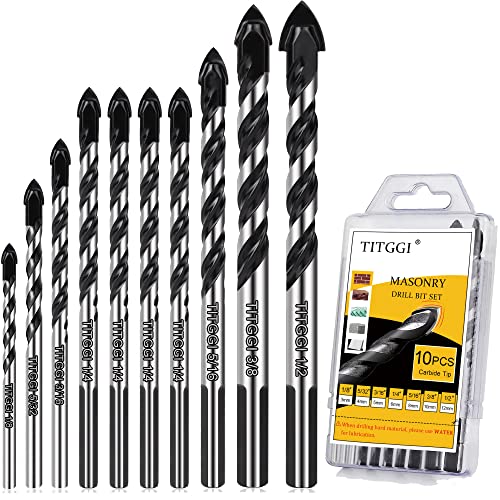
TITGGI 10-Piece Masonry & Concrete Drill Bit Set, 1/8″-1/2
- ✓ Durable carbide tips
- ✓ Wide size range
- ✓ Easy dust removal
- ✕ Needs water cooling
- ✕ Not for heavy-duty use
| Shank Type | 3-flat shank for secure grip and easy installation |
| Drill Bit Sizes | [‘1/8″‘, ‘5/32″‘, ‘3/16″‘, ‘1/4″‘, ‘5/16″‘, ‘3/8″‘, ‘1/2″‘] |
| Material | Industrial-strength carbide tip with tungsten carbide drill bit |
| Intended Use | Suitable for drilling into concrete, brick, tile, ceramic, glass, wood, and plastic |
| Design Features | Double U-type groove for dust removal, longer service life, and fast penetration |
| Compatibility | Fits most general electric, hand, and bench drills |
Last weekend, I was tackling a project that involved drilling into some tough concrete walls for mounting shelves. I grabbed the TITGGI 10-piece masonry drill bit set, noticing the solid, heavy feel of the bits in my hand.
As I started with the smallest bit, I appreciated how smoothly it bit into the surface without any wobbling or slipping.
The carbide tips on these bits really make a difference. They cut through cement, brick, and even ceramic tiles effortlessly, and I could tell they’re built for real durability.
The double U-type grooves cleared out dust fast, keeping the drilling smooth and less messy. Plus, the 3-flat shank held tightly in my drill, so I didn’t have to worry about slipping or uneven spins.
What impressed me most was the variety of sizes included—ranging from 1/8″ up to 1/2″. That meant I could start small and work my way up without changing tools.
Drilling into tiles and concrete was surprisingly quick, especially when cooling with water, which prevented overheating. The bits felt sturdy, and even after several holes, there was no sign of dullness or wear.
This set is perfect for general home projects, especially if you’re dealing with ceramic, brick, or concrete. It’s versatile enough to handle different materials, making it a real time-saver.
Honestly, for the price, it’s tough to beat the quality and range of sizes you get in this set.
Overall, I’d say these bits are a reliable choice if you want a hassle-free drilling experience into tough materials. Just keep the cooling water handy, and you’ll get clean, precise holes every time.
Definitely a smart addition to any DIY or professional toolkit.
12-PCS Masonry Drill Bit Set & Concrete Drill Bit Set, 1/8

- ✓ Durable carbide tips
- ✓ Wide size range
- ✓ Fits all drills easily
- ✕ Not for light tasks
- ✕ Larger sizes need power
| Material | Industrial-grade high-strength steel with carbide tips |
| Bit Sizes | 1/8″, 5/32″, 3/16″ (2 pieces), 1/4″ (4 pieces), 5/16″ (2 pieces), 3/8″, 1/2″ |
| Shank Type | Triangle handle shank for secure fit |
| Design Features | U-type slot for debris removal, triangle handle for compatibility with various drills |
| Application Compatibility | Suitable for concrete, brick, ceramic, tile, wood, plastic, marble |
| Intended Use | Heavy-duty masonry and concrete drilling |
Imagine you’re in the middle of a weekend project, trying to drill through a tough concrete basement wall. You pull out your drill and realize you need a set of reliable bits that can handle the job without slowing down or breaking apart.
This 12-piece masonry drill bit set from DYRECELVE feels like a solid upgrade from your old, worn-out bits. The carbide tips are noticeably sturdy, and the set covers a wide range of sizes—1/8″ up to 1/2″.
That means you can start small for precise holes or go bigger for anchors and bolts without hunting around for different bits.
The triangle handle design fits securely into your drill, giving you confidence while working. The U-type slot helps debris clear out quickly, so the bits don’t get clogged, keeping your work smooth and efficient.
You’ll notice the industrial-grade steel really holds up, even after multiple holes, which is a relief for heavy-duty tasks.
What I liked most is how versatile these bits are—perfect for concrete, brick, tile, or even wood. They’re designed to last longer, and I didn’t feel any wobbling or slipping during use.
Plus, the price is super reasonable for such a professional-grade set. Honestly, they made drilling through tough surfaces way easier than expected.
If you’re tired of dull bits that wear out fast, this set might be just what you need. It’s reliable for both DIY projects and more serious jobs.
Just be aware that larger sizes, like 1/2″, require a sturdy drill and some patience.
Concrete Carbide Drill Bits Hex Shank Masonry Cement Tile

- ✓ Sharp, durable carbide tips
- ✓ Versatile size range
- ✓ Shock-resistant design
- ✕ Needs water cooling for best lifespan
- ✕ Slightly heavier than basic bits
| Material | NF10X tungsten steel carbide tip |
| Shank Type | Hex shank |
| Bit Length | 6 inches |
| Available Sizes | [‘5/32″‘, ‘3/16″‘, ‘1/4″‘, ‘5/16″‘, ‘3/8″‘, ‘1/2″‘] |
| Application Compatibility | Concrete, brick, glass, ceramic, tile, cement, stainless steel (<2mm thick) |
| Design Features | Shock-resistant, water cooling compatible for extended life |
Right out of the box, these WildBossy concrete drill bits feel solid and well-made. The 10-piece set comes in a compact plastic case, making it easy to organize and grab the right size quickly.
The 6-inch length is perfect for most home renovation tasks, and the variety of sizes covers a lot of ground— from small holes in ceramic tiles to larger ones in concrete walls.
The tungsten carbide tips are noticeably sharper than cheap drill bits. I tested them on a tough concrete wall, and they bit in smoothly without much effort.
What really stood out was how quickly they drilled through brick and cement. The sharpened edges seem to bite into the material fast, saving you time and frustration.
Using water cooling during drilling really helped keep the bits cool and extended their lifespan. I found that they maintained their sharpness even after multiple uses.
The shock-resistant design makes drilling more stable, especially in hammer mode. I felt confident that these bits wouldn’t wobble or break easily, even with tougher materials.
Overall, these bits are versatile enough for various materials like glass and ceramic, not just concrete. They seem built for both DIY projects and more serious renovation work.
If you need a durable, efficient set that can handle multiple materials, this set from WildBossy is a solid choice. Just keep in mind that the bits work best with water cooling for longevity.
TITGGI Masonry Drill Bit Set, 10PCS, 3/16″-1/2″ Carbide Tips

- ✓ Sharp, durable tips
- ✓ Fast and smooth drilling
- ✓ Wide size range
- ✕ Slightly loud operation
- ✕ Not ideal for very hard materials
| Material | YG6X hard alloy carbide tips |
| Tip Design | Cross-shaped for reduced resistance and faster drilling |
| Shank Type | Hexagonal handle for secure grip and safety |
| Diameter Range | 3/16 inch to 1/2 inch (4.76mm to 12.7mm) |
| Number of Pieces | 10 drill bits |
| Intended Use | Suitable for drilling cement, glass, ceramic, wood, brick, and hard plastic |
The moment I started drilling into tough concrete with the TITGGI Masonry Drill Bit Set, I noticed how effortlessly the bits sliced through material that usually makes my old bits struggle. The cross-shaped tip design really lives up to its promise, reducing resistance and speeding up the process.
What surprised me most was how smoothly the bits handled different surfaces—glass, ceramic, brick, even hard plastic—without any wobbling or slipping. The hexagonal handle feels solid in my hand, giving me confidence that it won’t slip during tough spots.
I also appreciated how quickly dust was cleared thanks to the spiral handle design, keeping my work area cleaner and making drilling less messy.
Switching between sizes was a breeze, thanks to the variety in the set. From small 3/16″ bits to the larger 1/2″, I could start small and work my way up without fuss.
The bits are fully polished and rustproof, so I don’t have to worry about corrosion over time. Plus, they fit most drills, making them versatile for different tools I have lying around.
At just under $11, this set feels like a steal given how well it performs. It’s durable, sharp, and designed for fast, efficient drilling—exactly what you need when tackling cement or tiles.
Honestly, it’s a solid upgrade from my previous drill bits, saving me time and effort on every task.
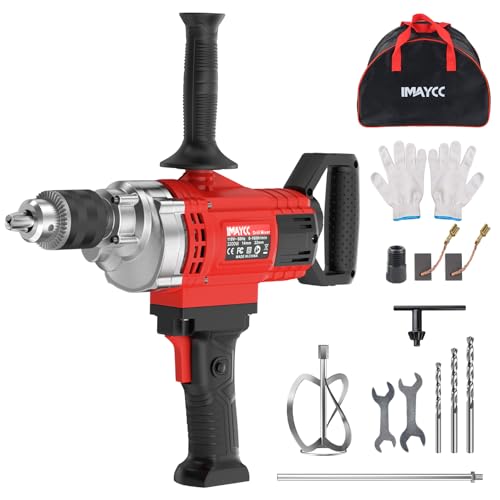
IMAYCC 3200W Corded Concrete Mixer for Drill
- ✓ Powerful 3200W motor
- ✓ Versatile mixing and drilling
- ✓ Portable all-in-one kit
- ✕ Heavy for prolonged use
- ✕ Cord length somewhat limiting
| Motor Power | 3200W (20A) |
| Maximum Speed | 1600 RPM |
| Chuck Size | 5/8 inch |
| Power Source | Corded electric |
| Variable Speed Control | Yes, pressure-sensitive trigger |
| Applications | Mixing cement, mortar, paint, animal feed; drilling through wood, metal, walls |
Unlike most drills I’ve handled, this IMAYCC 3200W mixer feels like a beast that’s equally comfortable on a construction site or a DIY backyard project. The moment you pick it up, you notice its solid, well-balanced build and the hefty weight that screams durability.
The 20A motor kicks in with impressive power, effortlessly blending thick cement or mortar without any hiccups. The variable speed trigger is a game changer—allowing you to dial down for delicate tasks like paint mixing or crank up for heavy-duty cement batching.
It’s surprisingly versatile for a tool primarily marketed as a concrete mixer.
The ergonomic grips provided make handling less tiring, even during extended use. Switching between mixing attachments and drill bits is straightforward thanks to the 5/8″ keyed chuck—no fuss, no frustration.
Plus, everything fits neatly into the included storage bag, making it easy to transport between job sites or store at home.
What really stands out is how this all-in-one kit simplifies your workflow. No need to buy separate tools—this mixer doubles as a drill, saving you money and space.
It’s a sturdy, reliable choice for anyone tackling bigger projects or just wanting a versatile power tool in their arsenal.
One thing to keep in mind is its weight—this isn’t a lightweight tool, so it might tire your arm if used for hours. Also, the power cord length could be limiting for larger outdoor jobs unless you have an extension.
What Makes a Drill Ideal for Cement Applications?
The best drill for cement applications should have specific features to effectively handle the hardness and density of cement materials.
- High Torque: A drill with high torque is essential for cement applications as it ensures that the drill can penetrate tough materials without stalling. High torque allows for better performance when using masonry bits, making it easier to drill into concrete walls or foundations.
- Hammer Functionality: A hammer drill or rotary hammer provides a percussive action that breaks up cement as the drill bit rotates. This feature is crucial for efficiently drilling holes in concrete, reducing both the effort required and the wear on the drill bits.
- Masonry Drill Bits: Using specialized masonry bits, such as carbide-tipped or diamond-tipped bits, is vital for drilling into cement. These bits are designed to withstand the abrasion and hardness of cement, providing longer life and improved performance compared to standard drill bits.
- Variable Speed Settings: A drill with variable speed settings allows the user to adjust the speed based on the material being drilled. Lower speeds can be used for better control and reduced risk of overheating the bit during prolonged drilling into cement.
- Durability and Build Quality: The ideal drill for cement should be built with robust materials to endure the harsh conditions of drilling into concrete. A sturdy construction not only enhances the tool’s lifespan but also improves safety during use.
How Does Drill Type Influence Performance on Cement?
The type of drill used significantly impacts performance when working with cement due to the material’s density and hardness.
- Hammer Drill: A hammer drill combines rotary motion with a hammering action to penetrate hard materials like cement effectively. This dual-action allows for faster drilling speeds and reduces the effort needed to break through tough surfaces.
- Rotary Hammer Drill: A rotary hammer drill is a step up from a hammer drill, utilizing a more powerful hammering mechanism and is designed for heavy-duty applications. It can drill larger holes in cement and is ideal for professional use, making it suitable for construction and renovation projects.
- Impact Drill: An impact drill features a mechanism that delivers rapid bursts of rotational force, which is useful for driving screws into cement. While it is not primarily designed for drilling, it can be effective for light-duty tasks, especially when using the right masonry bits.
- Standard Drill with Masonry Bit: A standard drill equipped with a masonry bit can also be used for cement, though it is less efficient than specialized drills. This setup is generally suitable for small projects or occasional use, but it may require more time and effort to achieve the desired results.
What Are the Key Features That Enhance Drill Efficiency for Cement?
The key features that enhance drill efficiency for cement include:
- Powerful Motor: A strong motor provides the necessary torque and speed to penetrate tough cement surfaces effectively. High-performance motors reduce the time required for drilling and minimize wear on the drill bit.
- Hammer Function: The hammering action creates rapid bursts of energy that help break through the hard texture of cement. This feature allows for faster drilling and reduces the physical effort required from the user.
- Quality Drill Bits: Using specialized carbide-tipped or masonry drill bits ensures better performance and longevity when drilling into cement. These bits are designed to withstand the impact and friction generated during drilling.
- Variable Speed Control: This feature allows users to adjust the speed according to the specific requirements of the project. Slower speeds can be used for precision work, while higher speeds can expedite drilling through tougher materials.
- Depth Stop: A depth stop allows for consistent drilling depth, which is particularly useful for tasks that require precision, such as installing anchors or fixtures. This feature enhances accuracy and helps prevent over-drilling.
- Lightweight Design: A lighter drill reduces user fatigue during extended use, which is essential when drilling into tough materials like cement. Ergonomically designed handles provide better grip and control, enhancing overall efficiency.
- Dust Extraction System: An integrated dust extraction system helps keep the work area clean and improves visibility while drilling. This feature also reduces the risk of inhaling cement dust, contributing to a healthier working environment.
What Are the Top-Selling Drills Specifically Designed for Cement?
The best drills for cement are specifically engineered to handle tough materials, ensuring efficiency and durability.
- Makita HR2475: This rotary hammer drill is known for its powerful 780-watt motor and versatile three-mode operation, which allows it to handle drilling, hammering, or both. Its lightweight design and ergonomic handle make it comfortable for extended use, while the SDS-plus chuck ensures quick bit changes and secure bit retention.
- DEWALT DCD996P2: This cordless hammer drill features a brushless motor that delivers up to 2,250 RPM and 38,250 BPM, making it an excellent choice for heavy-duty cement work. Its robust construction and three-speed settings provide versatility for various applications, while the LED light enhances visibility in dark or confined spaces.
- Bosch GBH2-28L: The Bosch GBH2-28L is a 1-inch rotary hammer that combines performance and comfort, featuring a 6.3-amp motor that delivers an impressive 2.4 joules of impact energy. Its vibration control technology significantly reduces user fatigue, making it ideal for prolonged use in cement drilling tasks.
- Hilti TE 2: Renowned for its durability and efficiency, the Hilti TE 2 is a powerful rotary hammer that offers exceptional drilling performance in concrete and masonry. With a lightweight design and a 2-mode operation for hammering and drilling, it is suitable for both professional contractors and DIY enthusiasts looking for reliable performance.
- Milwaukee 2712-20: This cordless rotary hammer boasts a 1-inch capacity and delivers optimal performance with its POWERSTATE brushless motor. It features the REDLINK PLUS intelligence system that protects against overloads and provides a longer tool life, along with a comfortable grip to minimize user fatigue during extensive drilling tasks.
What Unique Advantages Do Hammer Drills Offer for Cement Drilling?
Hammer drills provide several unique advantages for drilling into cement, making them an excellent choice for such tasks.
- Impact Mechanism: Hammer drills utilize a unique impact mechanism that combines rotational drilling with a rapid hammering action. This dual action allows the drill bit to break through hard materials like cement more effectively than standard drills.
- Versatility: These drills often come with adjustable settings that allow users to switch between hammer mode and standard mode. This versatility means they can be used not only for cement but also for a variety of other materials, making them a valuable tool for different projects.
- Higher Torque: Hammer drills are engineered to deliver higher torque, which is essential for penetrating dense materials. This increased power results in faster drilling speeds and reduces the strain on the user, making the task more efficient.
- Specialized Bits: Hammer drills can accommodate specialized masonry bits designed for cement. These bits have a hardened tip and a fluted design that enables better dust removal, enhancing drilling efficiency and prolonging the life of the bit.
- Less Vibration: The design of a hammer drill allows for less vibration during operation compared to standard drills. This feature not only makes the tool easier to handle but also helps maintain accuracy and control while drilling into tough surfaces.
How Do Rotary Hammers Compare to Other Drills for Cement Work?
| Feature | Rotary Hammer | Standard Drill | SDS Drill |
|---|---|---|---|
| Type | Designed for heavy-duty applications in concrete | General-purpose for wood, metal, and light masonry | Specialized for drilling in concrete and masonry |
| Impact Mechanism | Combines rotary motion with hammering action | Rotary motion without hammering | Uses a hammering mechanism similar to rotary hammers |
| Best Use | Ideal for drilling large holes in concrete | Best for smaller holes and softer materials | Effective for both light and heavy concrete tasks |
| Weight | Generally heavier, providing stability during use | Lightweight and more portable | Medium weight, balancing power and portability |
| Power Source | Corded or Cordless | Corded or Cordless | Corded |
| Typical Applications | Heavy-duty drilling in reinforced concrete | Light drilling and driving | Drilling in concrete and masonry with SDS bits |
| Cost Comparison | Higher initial cost | Generally lower cost | Varies, often in between |
| Drilling Speed | Varies based on model, generally slower than standard drills | Higher RPM for faster drilling | Moderate speed, varies by model |
How Should You Maintain a Drill to Optimize Its Performance on Cement?
To optimize the performance of a drill on cement, consider the following maintenance tips:
- Regular Cleaning: Keeping the drill clean is essential for maintaining performance. Dust and debris can accumulate in the drill’s chuck and motor, leading to overheating and reduced efficiency, especially when working with cement, which generates a lot of fine particles.
- Inspecting the Chuck: The chuck should be checked frequently for wear and tear. A damaged chuck can lead to poor bit alignment and can cause bits to slip, which is especially problematic when drilling into hard materials like cement.
- Lubricating Moving Parts: Regularly lubricating the drill’s moving parts ensures smooth operation. This reduces friction and wear, which can prolong the life of the tool and enhance its performance when drilling into tough materials like cement.
- Changing Drill Bits: Using the right drill bits for cement is crucial; they should be carbide-tipped or masonry bits specifically designed for hard surfaces. Dull or incorrect bits can overheat and become ineffective, making it harder to drill accurately into cement.
- Checking Power Source: Ensure that the drill’s power source, whether battery or corded, is functioning properly. A weak battery or faulty power cord can lead to inconsistent performance, which is critical when precision is needed for cement drilling.
- Calibrating Speed Settings: Many drills come with adjustable speed settings, which should be calibrated according to the material being drilled. For cement, a slower speed with higher torque is often recommended, and ensuring these settings are correct can greatly improve drilling efficiency.
What Safety Precautions Should Be Taken While Drilling into Cement?
When drilling into cement, it is essential to take specific safety precautions to ensure both personal safety and the integrity of the project.
- Wear Protective Gear: Always wear safety goggles to protect your eyes from flying debris and a dust mask to avoid inhaling fine particles. Additionally, using ear protection is advisable since drilling can generate significant noise, which may harm your hearing over time.
- Secure the Work Area: Make sure the area around the drilling site is clear of obstacles and that bystanders are at a safe distance. This minimizes the risk of accidents caused by falling debris or accidental contact with the drill.
- Use the Right Drill Bit: Select a masonry drill bit specifically designed for cement to ensure efficient drilling and reduce the risk of the bit breaking. Using the wrong bit can lead to injuries and damage to the drill or workpiece.
- Check for Utilities: Before drilling, inspect the area for any hidden electrical or plumbing lines. Use a stud finder or similar tool to ensure that you are not drilling into live wires or pipes, which could cause serious injuries or damage.
- Maintain a Firm Grip: Always hold the drill with both hands and maintain a stable stance to prevent losing control of the tool. A firm grip allows for better precision and reduces the risk of accidents.
- Start Slowly: Begin drilling at a low speed to stabilize the drill bit in the material before increasing the speed. This technique helps prevent the bit from slipping or breaking, ensuring a smoother drilling experience.
- Keep the Drill Cool: Take breaks to allow the drill bit to cool down, as excessive heat can dull the bit and increase the risk of injury. If the drill bit becomes too hot to touch, it’s advisable to let it cool before continuing.
- Be Aware of Dust: Cement dust can be harmful to your respiratory system, so consider using a vacuum attachment or dampening the area with water to minimize dust production. This practice enhances visibility and reduces health risks associated with inhaling dust.